
Turning complex legal and business rules into digital workflows
STIM represents music creators and publishers, licensing music and distributing royalties. I led the move from fragmented, partly manual contract processes to a shared digital lifecycle covering creation, approval, signing, storage, renewal and termination.

- Platform Implementation
- Legal Workflows
- Business Rules
- Enterprise SaaS
Summary
I led the procurement and implementation of a new contract lifecycle management platform, combining Product Ownership, UX and requirements analysis to support STIM’s transition from fragmented, manually managed contract processes to a shared digital platform. The work covered requirements and process design, platform selection and configuration, guided agreement workflows, integrations, migration of legacy agreements, metadata and permissions, as well as rollout and ongoing governance.
The result was a more consistent, self-service approach to contracting, with better visibility and control across the contract lifecycle and a platform capable of supporting both common organisational needs and more specialised legal requirements.
Role
Sep 2023 – Apr 2026, part time
Product Owner
UX Designer
Scope
Product ownership · Requirements · Workflow design · Procurement · Rollout · Migration · Integration
Platform
Ironclad · Contract Lifecycle Management · SaaS · Salesforce integrations · E-signing
Team
Cross-functional collaboration across Legal, Licensing, IT, HR, Finance, vendors and implementation partners
The Challenge
The challenge was to replace fragmented and partly manual contract processes with a scalable digital lifecycle covering creation, approval, signing, storage, renewal and termination. This meant translating complex legal and business rules across several departments into workflows that supported self-service, were understandable for users and enforceable for the business.
Complex rules and organisational needs
STIM managed thousands of agreements, including contracts dating back to the early 1900s. Different agreement types followed different approval and signing paths depending on business area, financial thresholds, language and responsibility.
More than 40 templates were stored and shared in different places, increasing the risk of inconsistent contract language. The platform also needed to serve several parts of the organisation while keeping confidential information separated and ensuring that the right people could approve, sign and access agreements.
Fragmented and manual processes
The way of working with contracts was often manual and differed between teams. Agreements were printed, physically signed and circulated, while Legal was often brought in late in the process.
There was no central structure for managing contracts throughout their lifecycle. Agreements could be missed for renewal or termination, ownership became unclear when employees changed roles, and information had to be pieced together from different sources. Negotiations and important decisions were also difficult to trace when they remained in email threads.
Adapting processes to a SaaS platform
The goal was not to recreate the existing contract landscape in new software, but to simplify it and move to a scalable SaaS platform.
This meant deciding which existing processes and requirements were important to preserve and which could be changed. User needs, business rules, security requirements and platform limitations sometimes pointed in different directions. The challenge was to find solutions that worked for users and the organisation without adding unnecessary customisation or recreating the complexity of the old way of working.
My Role
My role combined Product Ownership, requirements analysis, process design and rollout. I led the procurement and implementation, owned the backlog and worked closely with stakeholders and vendors to turn legal and business requirements into workable processes and product solutions. I was involved from early discovery through design, prioritisation and delivery, balancing user needs with business rules and technical constraints.
Turning business complexity into product requirements
I mapped agreement types, existing processes, approval rules, signing authorities and user needs across the organisation. The goal was to understand not only what users wanted the platform to do, but the legal and business rules behind the different workflows.
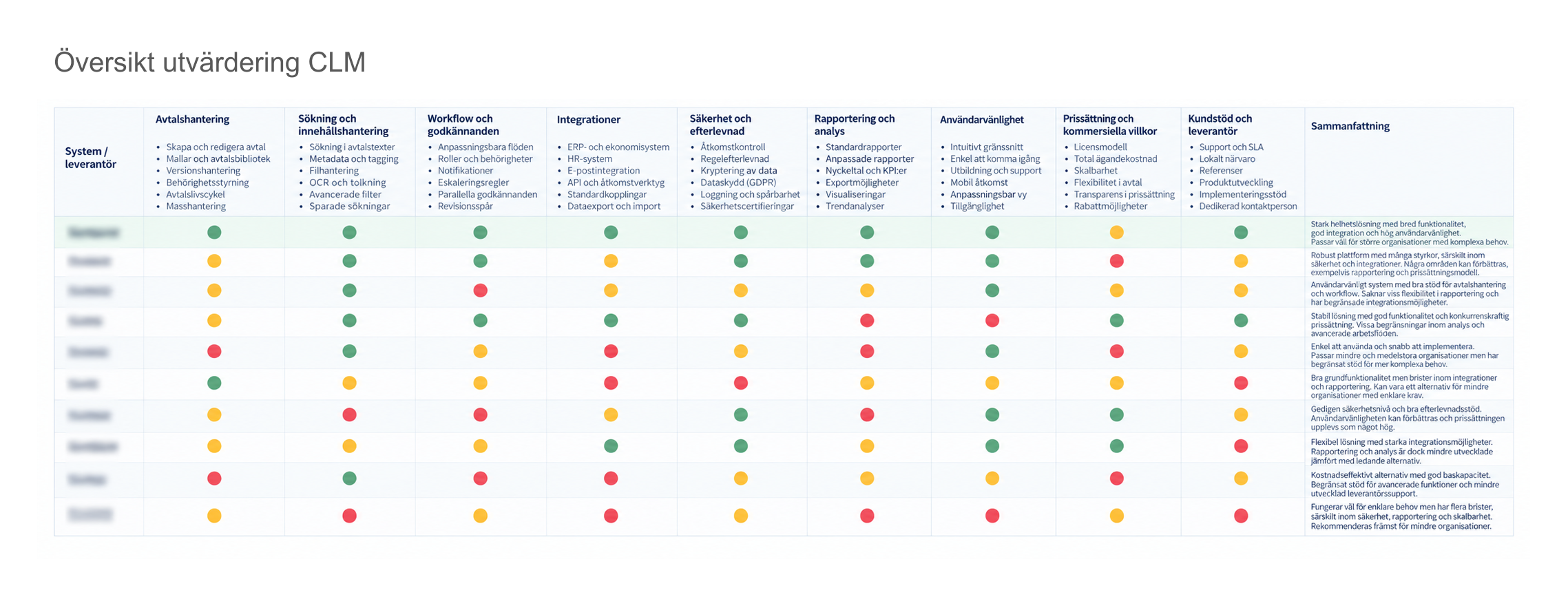
I translated this into prioritised requirements covering usability, security, integrations, configurability and implementation effort. These requirements were used both to evaluate potential platforms and later to structure the implementation backlog.
I also worked with users and business owners to define what information needed to be captured for different agreement types, balancing the organisation’s need for structured data with the effort required from users to provide it.
Leading platform selection and implementation
I evaluated around 10 CLM solutions against the prioritised requirements and led the work from procurement into implementation. Once the platform was selected, I owned the backlog and prioritised work based on user needs, business value, risk, dependencies and implementation effort.
A recurring part of the role was making trade-offs between business needs, legal requirements and platform constraints. I worked closely with the vendor, challenged proposed solutions when they did not meet requirements and helped decide when to configure the platform, change the process or find another solution.
These decisions continued after launch as we learned more about how the platform worked in practice.
Designing workflows around agreement rules
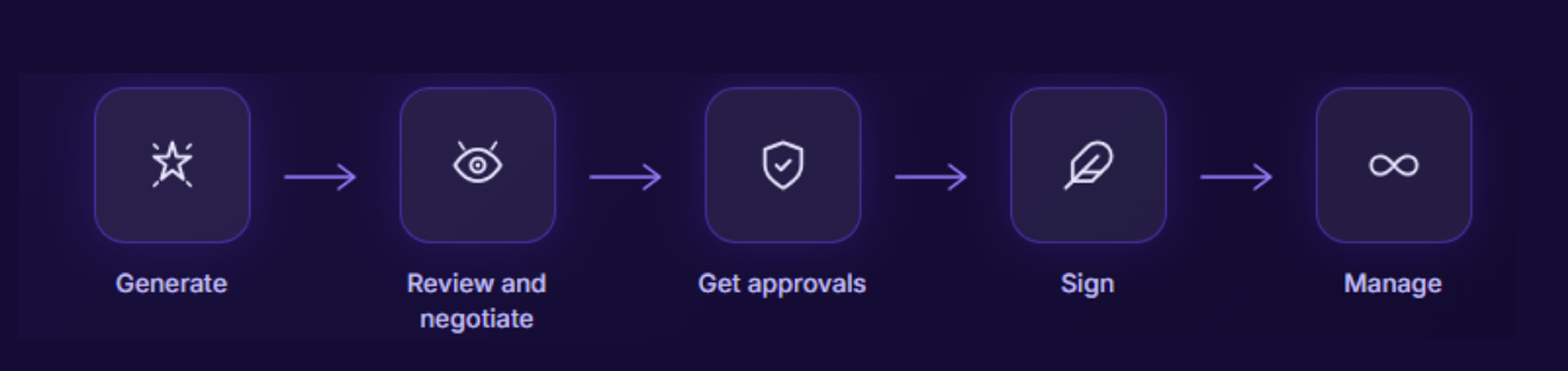
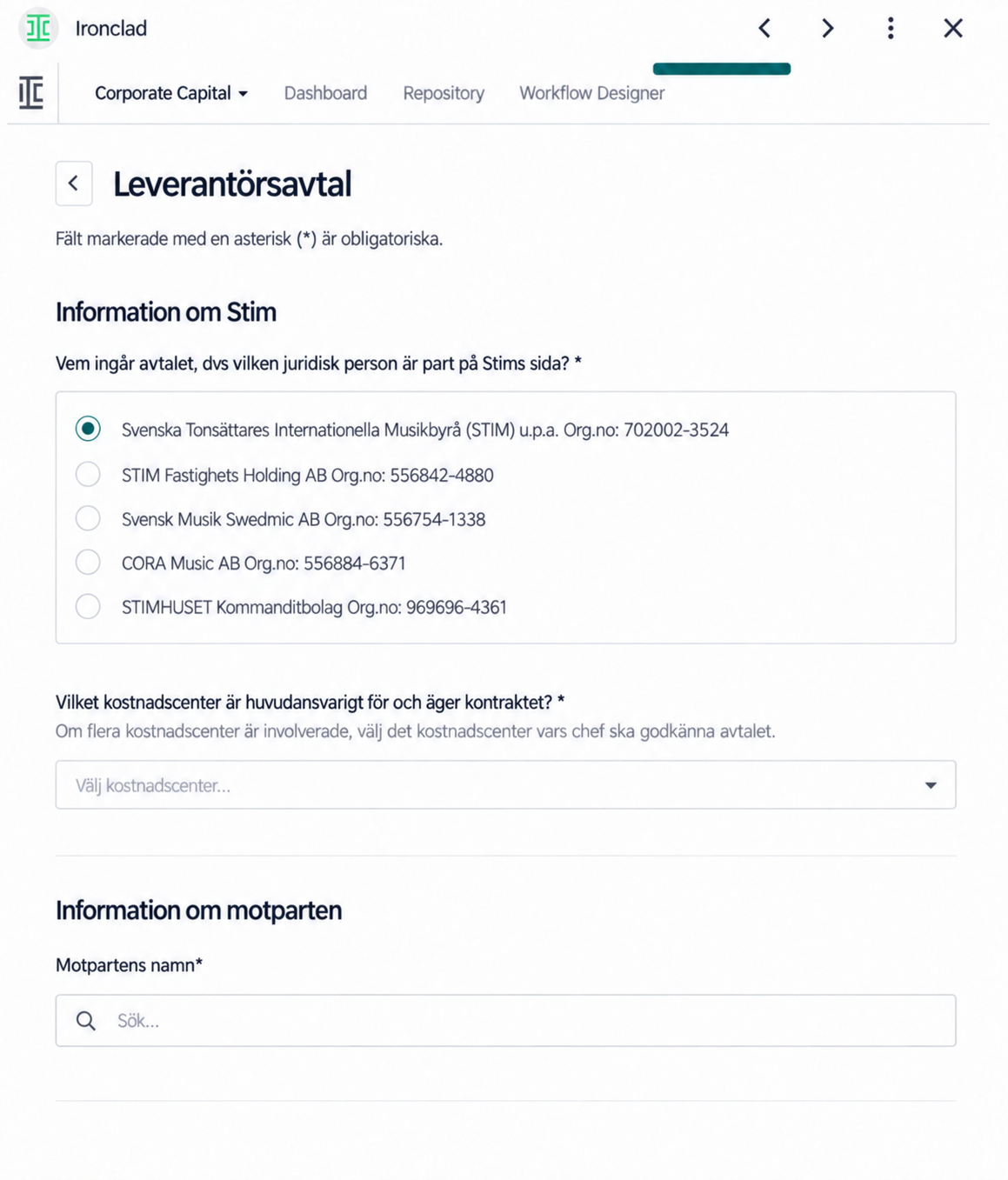
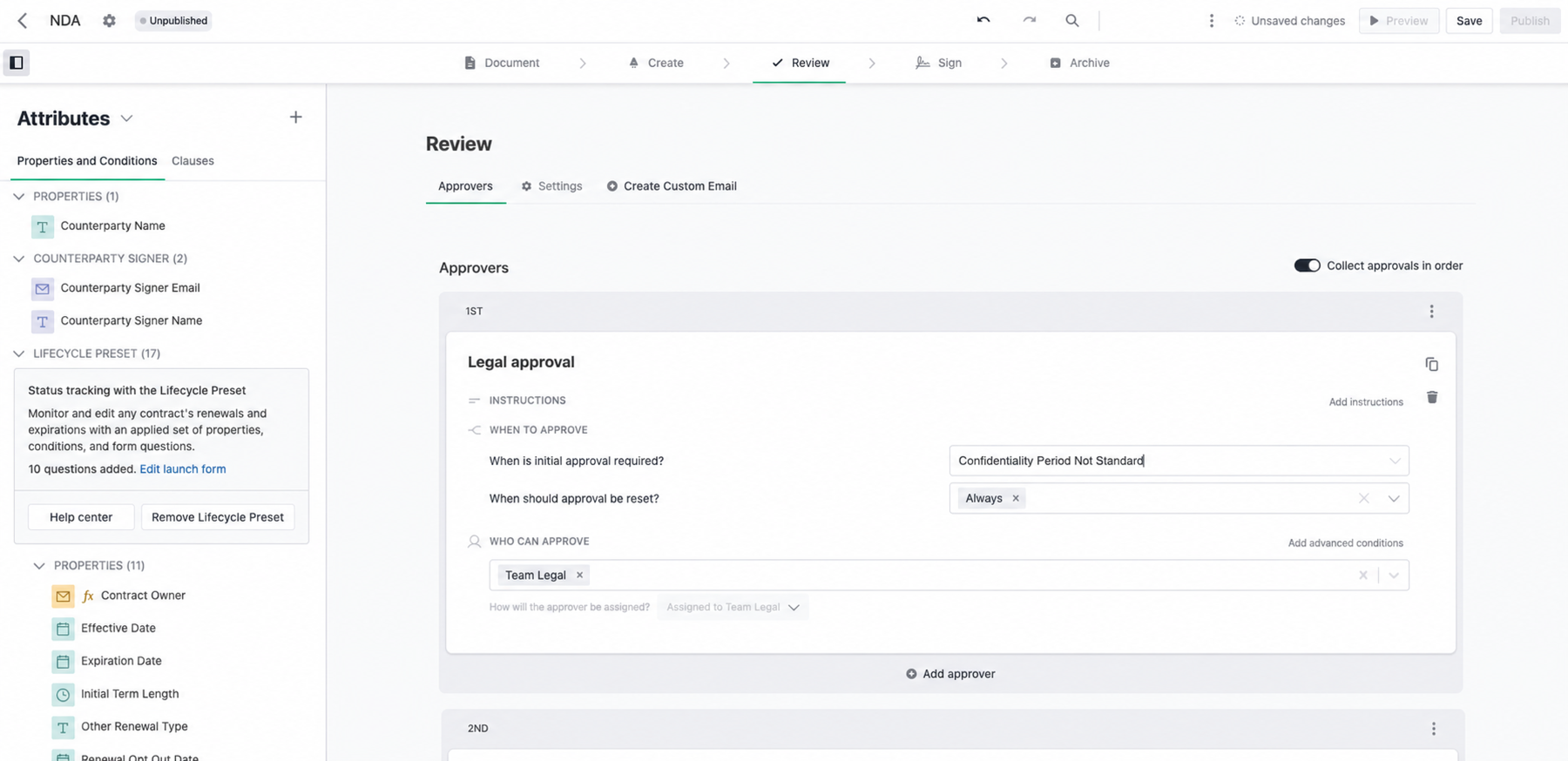
A large part of the work was turning complex agreement logic into guided digital workflows. I worked with Legal and business stakeholders to define how different agreement types should be created, approved, signed and managed in the platform.
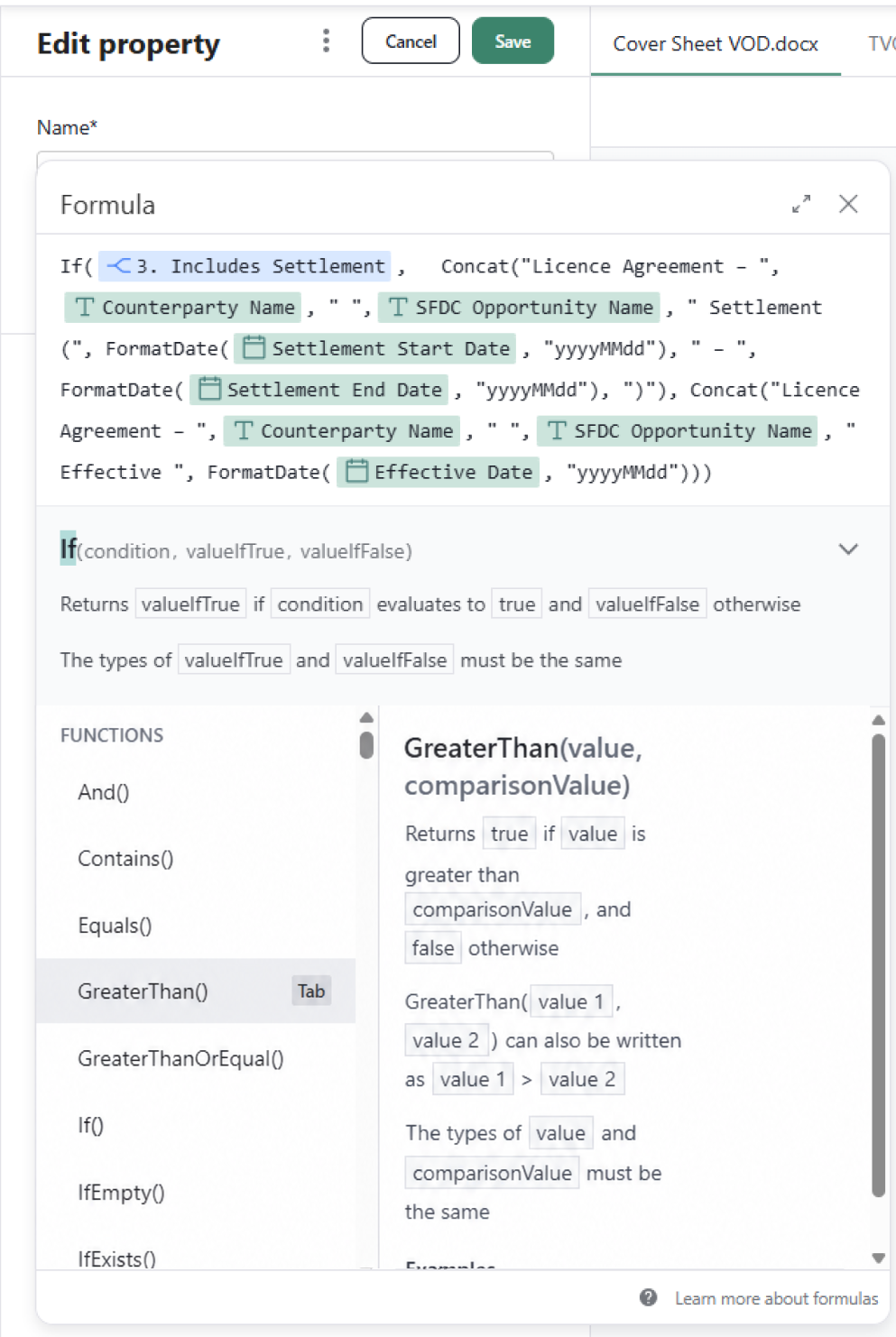
The aim was to make routine agreements easier to handle without requiring users to understand the underlying legal structure. This meant deciding what information to ask for, when different rules should apply and where users needed guidance or flexibility.
I defined practical ways to handle recurring situations that were not directly supported by the platform, or where STIM needed its own approach. This included translating organisational needs into repeatable workflows, rules and guidance that could be maintained over time.
Connecting the platform to the organisation
The implementation involved more than the contract workflows themselves. It also required coordinating integrations, permissions, migration, rollout and the operating model needed to manage the platform over time.
I prioritised and set up integrations where they created clear value. In parallel, I connected contracting to related organisational processes, including IT procurement, member management and partner confidentiality.
Together with managers and contract owners, I defined the information needed for search, reporting and lifecycle management. This informed a metadata structure that balanced useful reporting with the effort required to create and maintain the data. I drove and supported the migration of legacy agreements, using scripts and automation to reduce manual effort and carrying out quality checks to ensure the migrated data was reliable.
The rollout was phased around selected workflows and users, supported by workshops, training and ongoing feedback. For long-term operation, I established structures for managing users, licences, workflows and future changes. A group-based permissions model was designed to evolve as roles and responsibilities changed, creating a solid foundation for ongoing administration, governance and change.
Impact
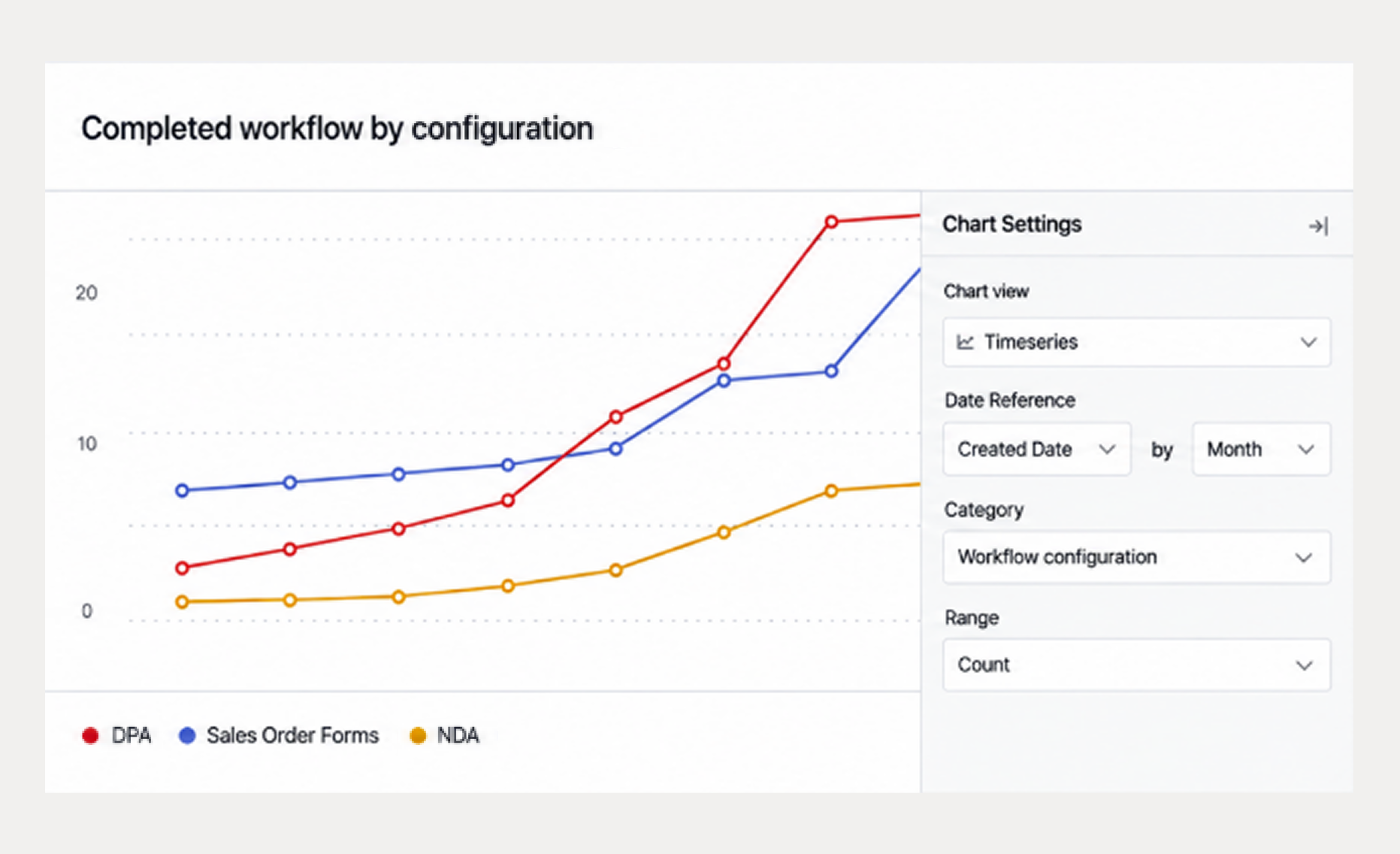
My work, together with Legal, business stakeholders, IT and implementation partners, helped move contract management from fragmented and heavily manual processes towards a more standardised, auditable and scalable digital lifecycle. The result was not simply a new system, but a clearer product and process model for how contracts should be created, managed and governed at STIM.
Consolidated templates and a more consistent process
I consolidated more than 40 existing contract templates into 16 workflows. This gave stakeholders and users a clearer overview of the contract landscape and reduced unnecessary variation while preserving the legal and business rules that genuinely differed between agreement types.
Instead of relying on separate templates and ad hoc processes, users could follow a consistent flow for creating, negotiating, approving and signing agreements. Keeping the number of workflows deliberately limited also made the platform easier to maintain and develop over time.
Better control throughout the contract lifecycle
The CLM was now the central structure for completed and legacy agreements. I ensured all contracts were assigned an owner responsible for renewal or termination where relevant.
The repository made it possible to find any agreement, understand its status and follow up on what needed to happen next. Contract history and negotiations also became more traceable, reducing reliance on individual inboxes, local files and personal knowledge.
More guided self-service for users
Routine agreements could increasingly be handled through guided workflows using approved language, AI playbooks, predefined rules and the correct approval and signing paths.
The workflows I designed allowed users to complete more of the process themselves while still meeting Legal’s requirements. They reduced repetitive administrative work and allowed Legal to focus more of its time on negotiations, exceptions and issues that genuinely required legal judgement.
A platform that could continue to evolve
I established governance for how the platform would be managed after implementation, including ownership of workflows, users, licences, integrations and future changes.
Feedback from real usage continued to shape the product after launch. I used it to refine workflows, improve naming and reminders, and reassess lower-value features and integrations when they no longer justified their effort, cost or risk. This kept the platform aligned with changing user and organisational needs.