
Transforming Spotify’s content management ecosystem
Spotify’s CMS is a central platform for managing catalogue content across the service, used by many internal teams and external partners. The challenge was to create a more coherent product within a fragmented ecosystem of specialist workflows, dense data and surrounding tools.

- Professional Tools
- Operational Workflows
- Systems Thinking
- Data-dense Interfaces
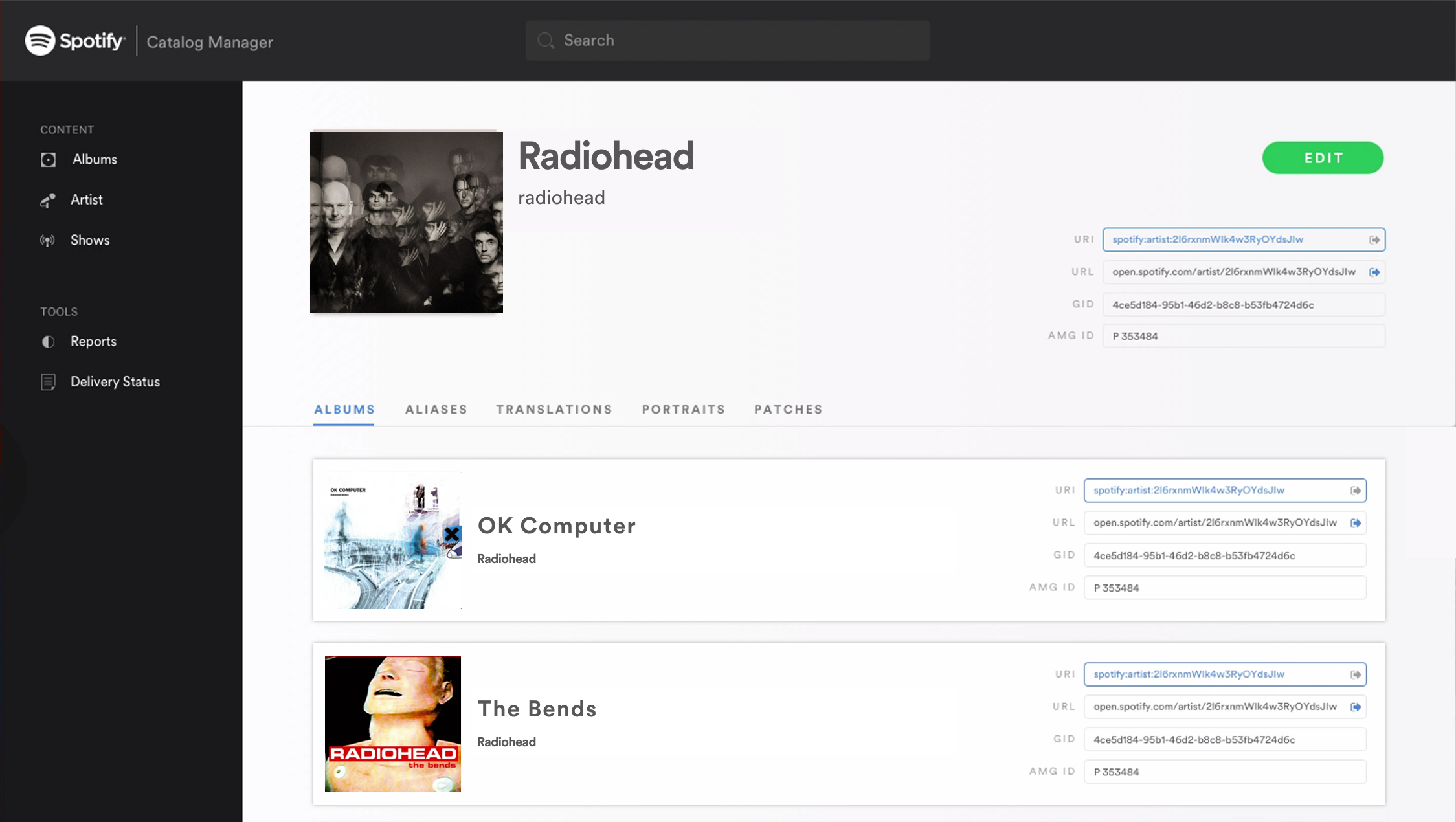
Summary
I worked with the product team to redefine Spotify’s CMS within a much larger ecosystem of internal tools. Research across around 20 teams and mapping of 32 surrounding systems helped clarify recurring user needs, dependencies and which capabilities should belong in the CMS, be handled through integrations or remain in specialised tools.
I translated this into product concepts, information architecture and expert workflows for working with large volumes of catalogue data, including advanced search, filtering and bulk operations. The work gave the team a clearer product direction, established reusable UX patterns and a design system, and created a more intentional and consistent experience for specialist users.
Role
Aug 2016 – Oct 2017
UX Designer
Scope
Concept development · User research · Ecosystem mapping · Requirements · Interaction design · Design systems · Prototyping
Platform
Web · Internal CMS · Catalogue data · Connected internal systems
Team
Product team with six developers, Product Owner and domain experts, collaborating with users, stakeholders, UX and adjacent product teams across Spotify
The Challenge
The challenge was to redesign a central internal content-management platform used across many internal Spotify teams as well as by external users connected to a large ecosystem of surrounding tools. The work had to balance specialist workflows, large volumes of interconnected catalogue data, different user needs and the question of which problems should be solved within the CMS versus elsewhere in the wider system landscape.
A CMS at the centre of a much larger ecosystem
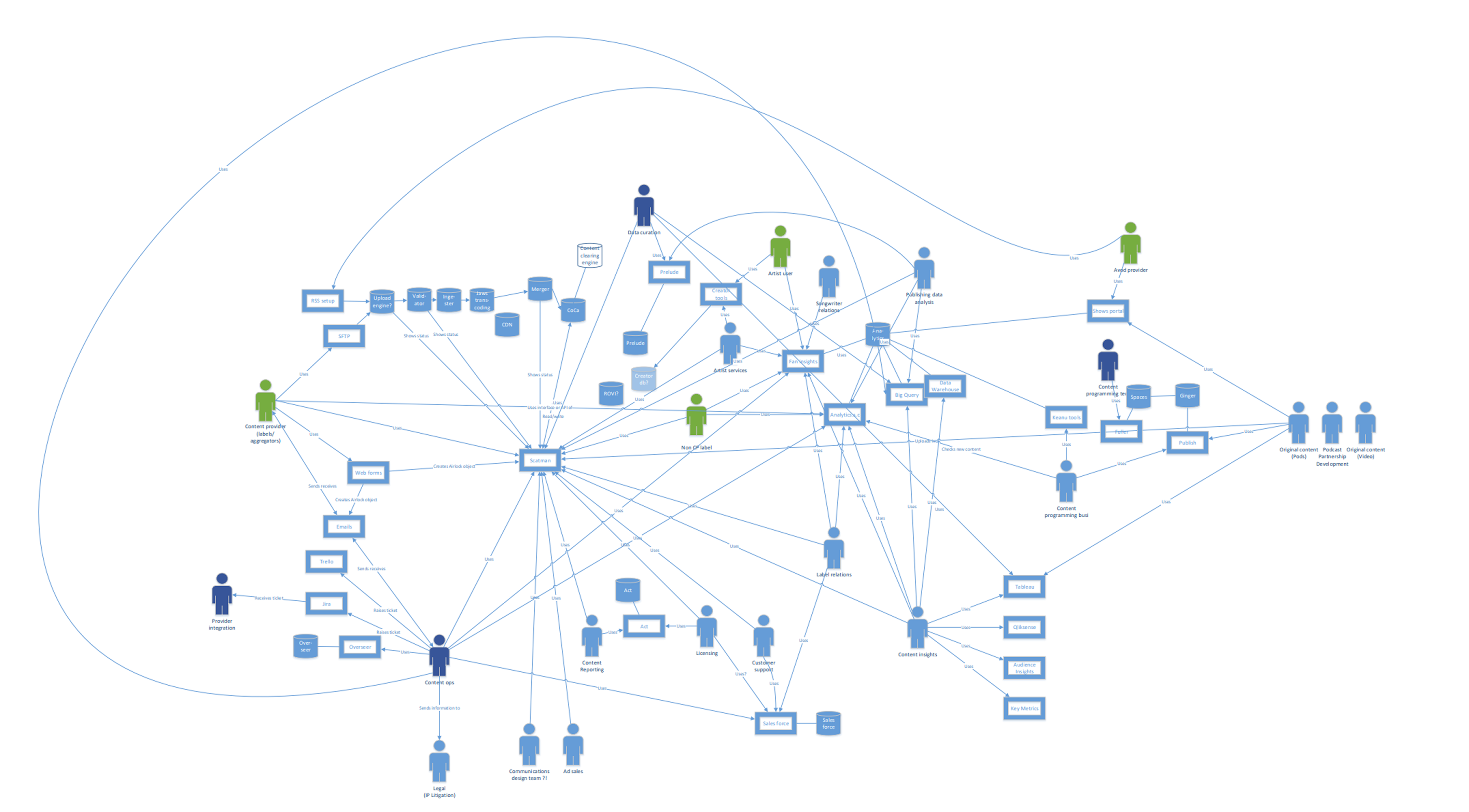
The CMS was not an isolated product, but was used alongside a large number of internal systems that supported different parts of Spotify’s content operations. Users frequently moved between tools, relied on information from several sources and developed their own ways of working around gaps in the existing system.
A major challenge was therefore understanding where the CMS fitted into the wider ecosystem and which problems actually belonged in the CMS itself.
Supporting many teams with very different needs
The platform supported expert internal users across many different parts of the organisation. Their needs varied significantly. Some users worked with individual artists or releases, while others needed to search, compare or update large volumes of catalogue information.
The challenge was to identify and categorise the different user groups, understand their specific needs, and then prioritise both groups and needs. From there, we explored concepts that could support specialist workflows without creating a fragmented product tailored to each individual team.
Making dense information efficient to work with
The CMS contained large amounts of interconnected metadata and needed to support advanced search, filtering, editing and bulk operations. Expert users valued speed and control and often needed to manipulate large data sets rather than work through simple step-by-step flows.
The design therefore had to make complex information easier to understand without removing the flexibility and density experienced users depended on.
My role
My role covered user research, requirements analysis, ecosystem and workflow mapping, information architecture, interaction design, prototyping and usability testing. I worked closely with internal users, stakeholders and developers to understand how Spotify’s content management workflows worked across teams and systems and translate that complexity into a clearer product structure.
Researching the wider ecosystem, not just the interface
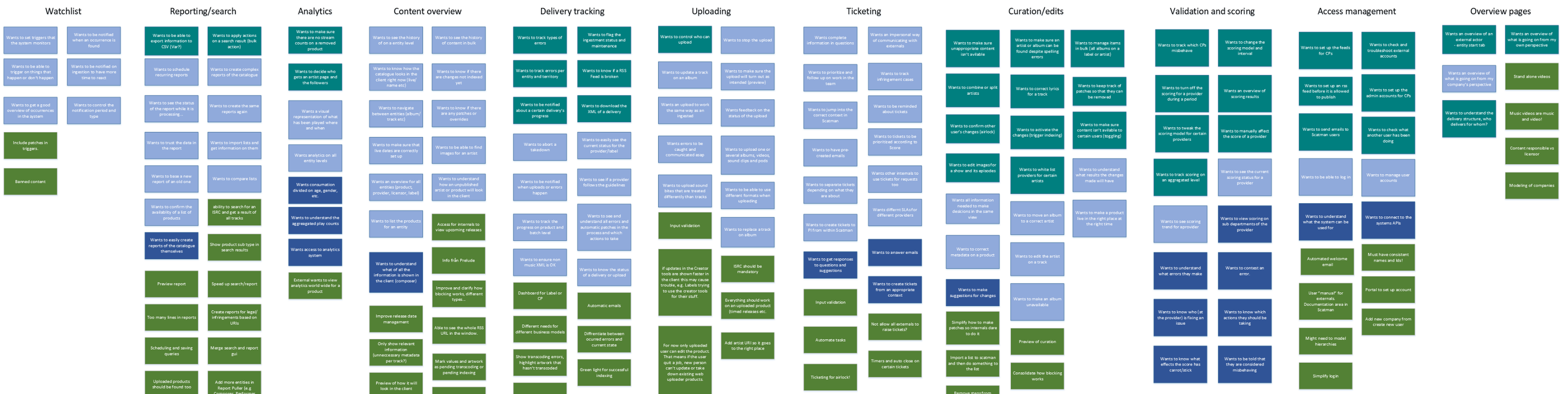
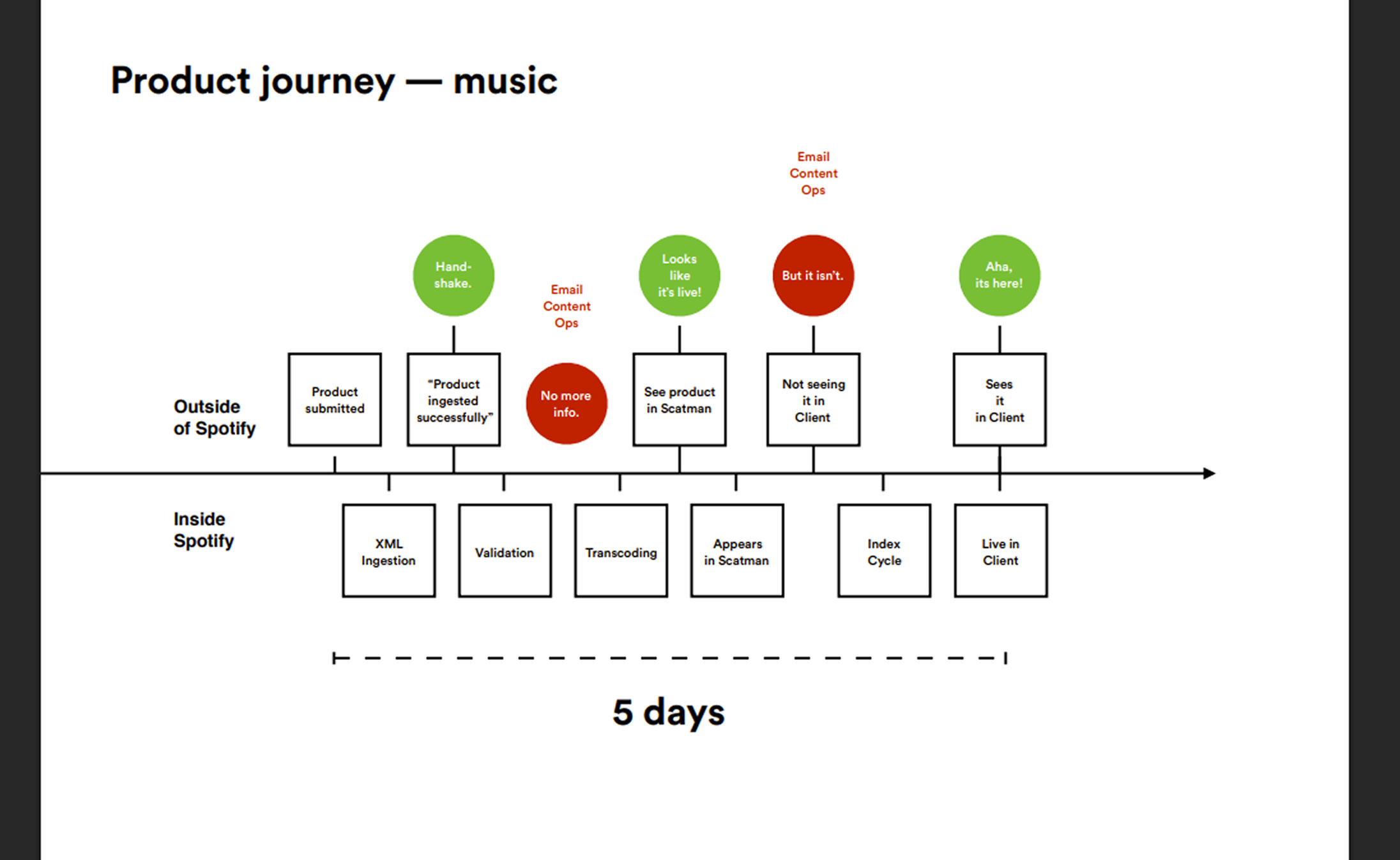
I started by building a detailed picture of the people, systems and workflows surrounding the CMS. I conducted 33 interviews across around 20 teams, including people working with catalogue management, licensing, artist and label relations, editorial content, publishing data and support. In parallel, I mapped 32 surrounding systems and their relationships to different user groups and workflows to understand which tools people relied on, where information originated, and where users experienced duplication, gaps or unnecessary handovers.
I synthesised the findings across teams to identify recurring needs, dependencies and areas of overlap, and to clarify which capabilities should sit within the CMS and which belonged elsewhere.
Shaping product direction, priorities and ways of working
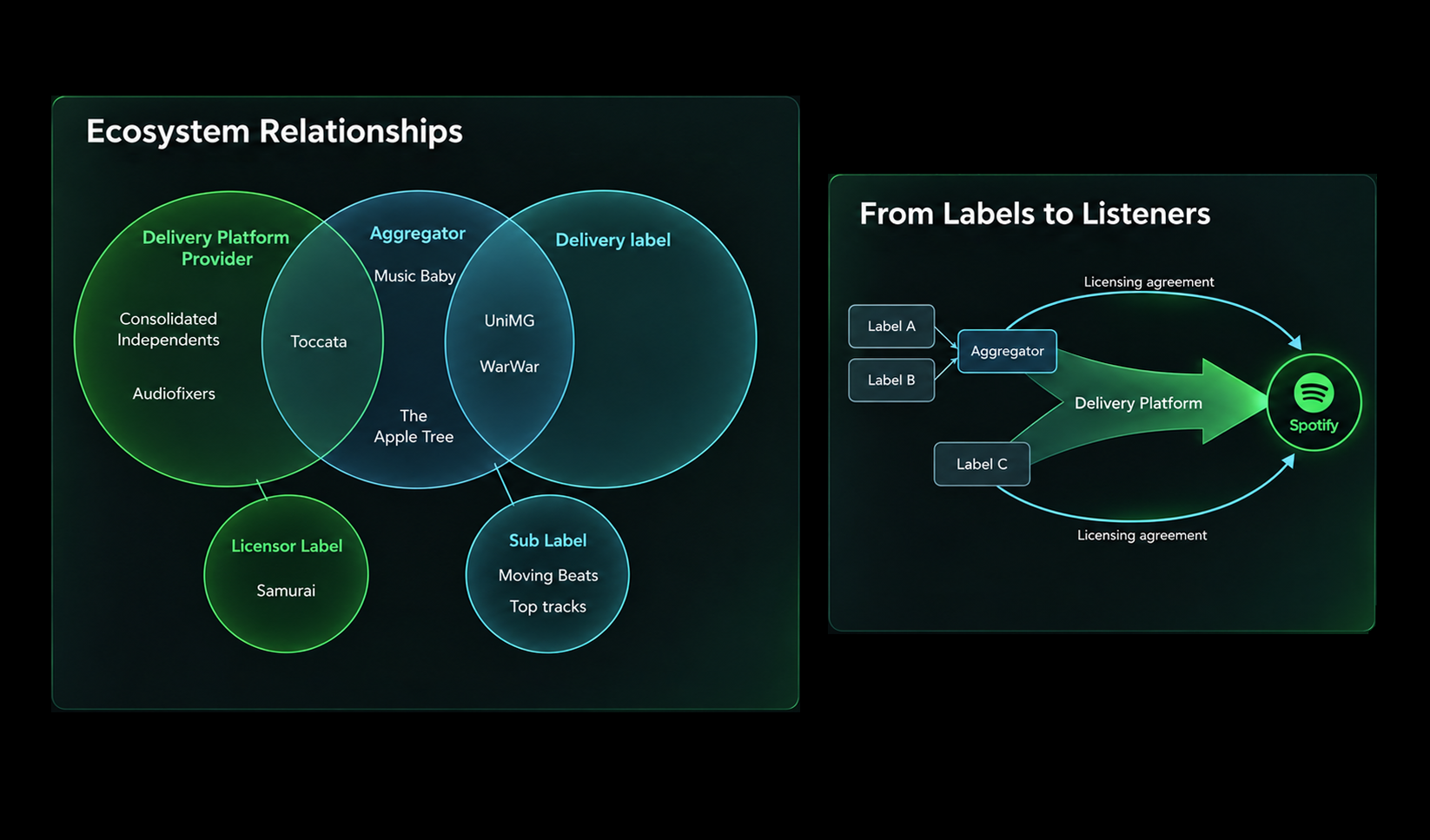
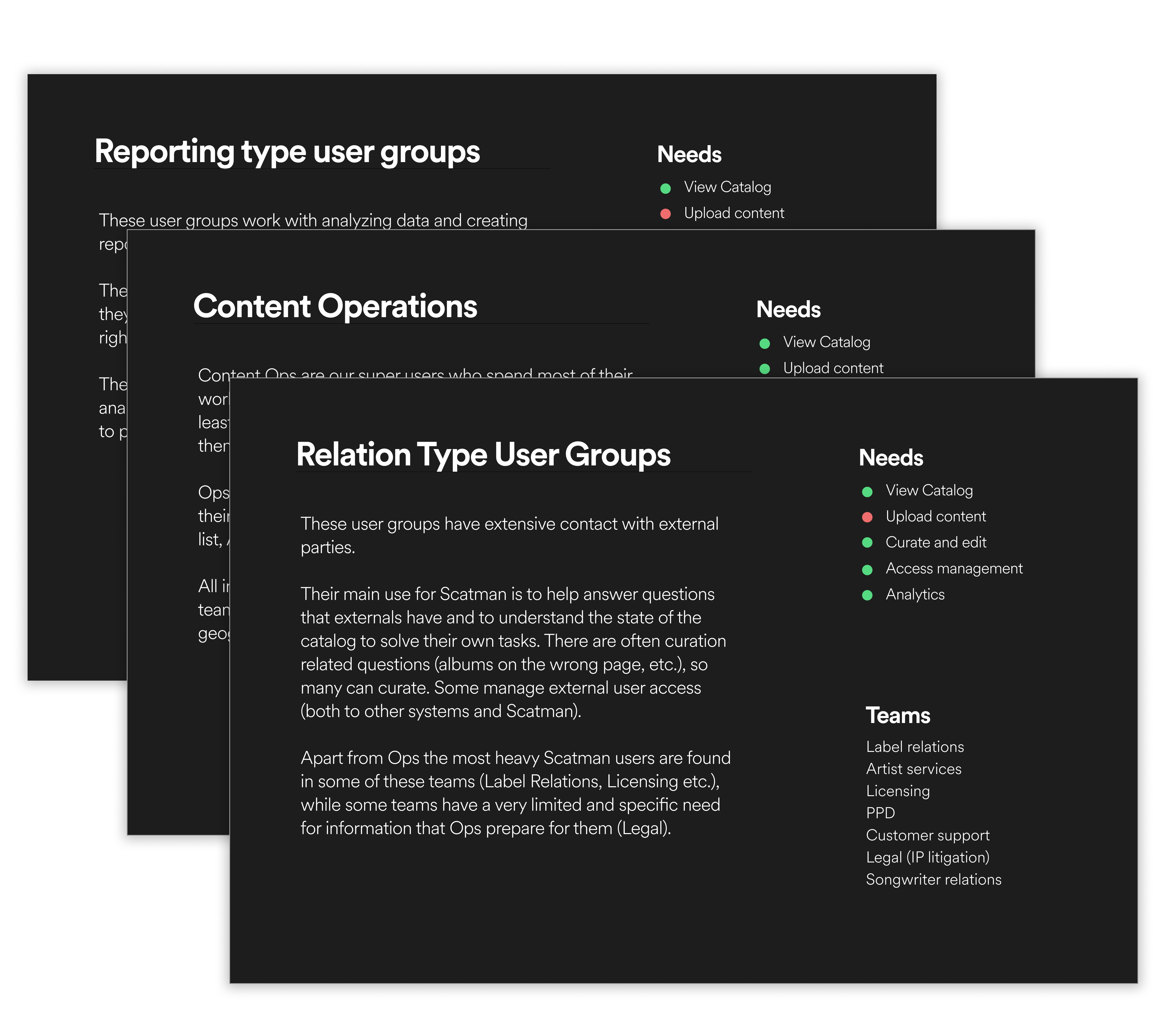
The research was also used to define what the CMS should become, rather than simply generate a list of usability improvements. I grouped the many internal teams into broader user types and worked with the team to identify which groups and needs should be prioritised based on their contribution to the wider product goals.
We used the findings to clarify the role of the CMS within Spotify’s broader tool ecosystem: which capabilities should be consolidated into the platform, which should be handled through integrations, and where another specialised system was the better solution.
I also structured the emerging requirement areas and priorities, covering areas such as content overview, editing, uploading, delivery tracking, reporting, access management and integrations.
In parallel, I helped establish a clearer way of working for the team, defining how ideas moved from planning and prioritisation through requirements, design, development and UX verification. This helped integrate UX, technical analysis and requirements into the team’s agile delivery process and created clearer expectations around when work was ready to move forward.
Creating coherence across teams and systems
The CMS sat within a wider organisational and technical landscape, so some problems could not be solved by the product team alone. I worked across team boundaries to clarify dependencies and explore how separate systems could still provide a coherent experience to users.
For external users in particular, the goal was to avoid exposing Spotify’s internal organisational structure through disconnected tools and interfaces. This required coordination with adjacent product teams and a shared view of where responsibilities and capabilities should sit.
Designing efficient expert workflows
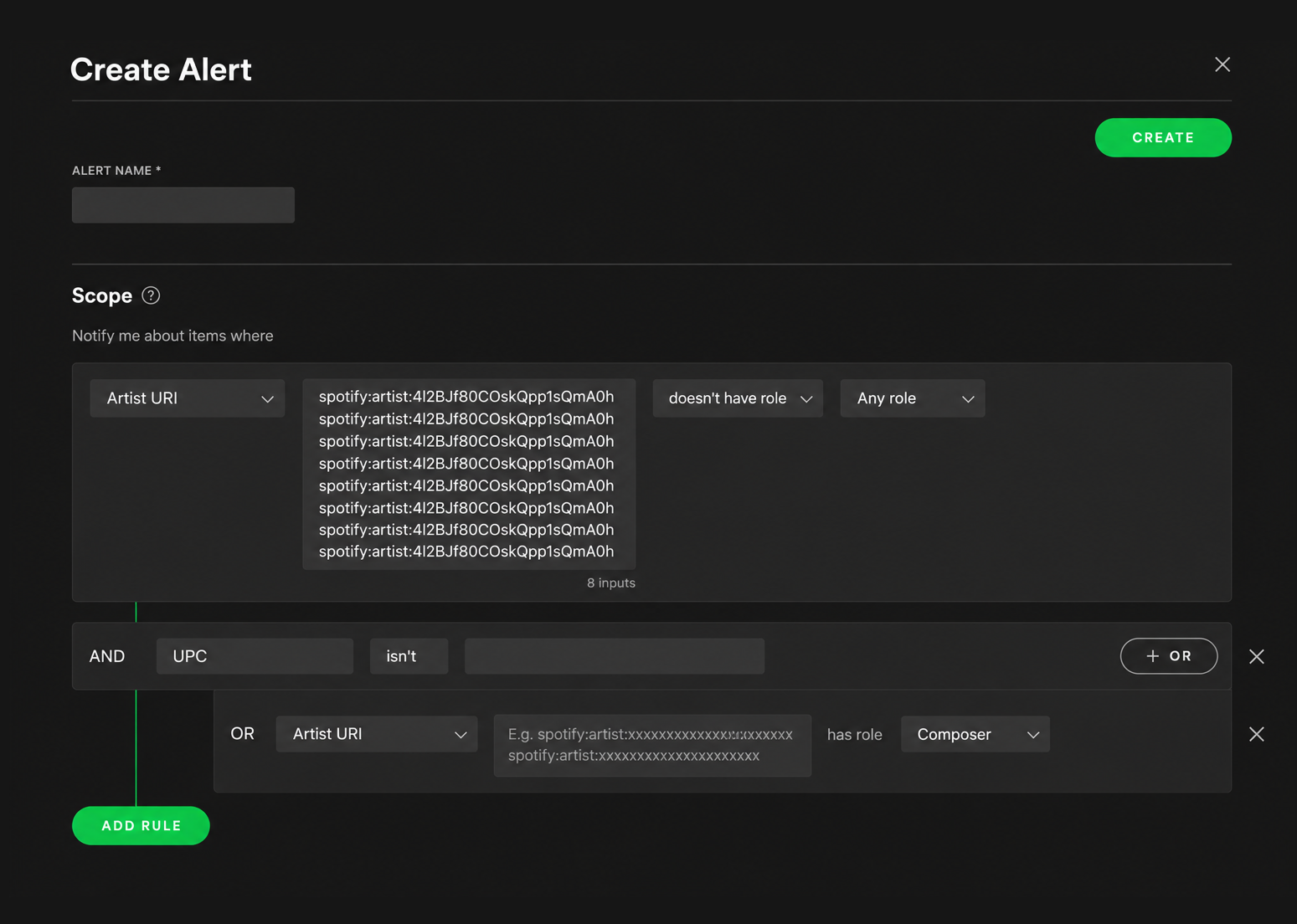
I translated the research into information structures, workflows and feature concepts, with particular attention to areas where users needed to work efficiently with large volumes of information. This included an advanced query builder for constructing complex searches across large sets of content packages, alongside improved filtering and bulk operations.
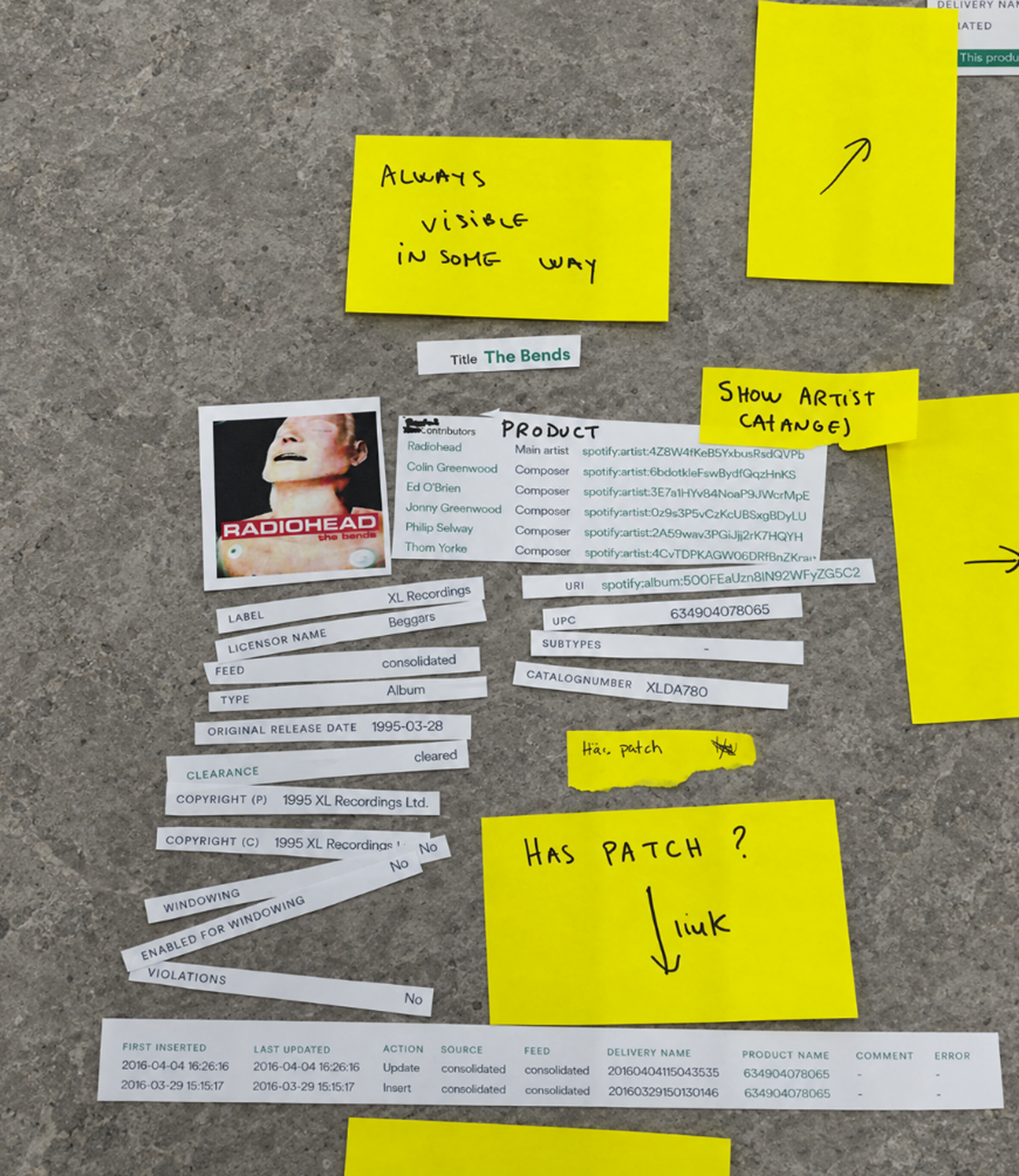
Rather than simplifying an expert tool into basic consumer-style flows, the goal was to make complex tasks easier to understand and faster to perform while preserving the flexibility experienced users relied on. I explored different approaches through prototypes and user testing, iterating the designs based on how well they supported real tasks and existing working practices.
Creating a coherent and scalable product experience
As the product developed, I created a design system with reusable patterns and components to improve consistency across the CMS. This established clearer conventions for recurring interactions and helped ensure that the interface was intentionally designed rather than emerging from individual implementation decisions.
The visual and interaction design took cues from Spotify’s broader product identity, but was adapted to the needs of an information-dense professional tool rather than a consumer product. That meant prioritising clarity, efficiency and predictability over patterns that might feel more current or expressive in the consumer client. For example, we relied on established form patterns with strong usability where these supported complex tasks better.
I worked closely with developers throughout implementation, using prototypes, detailed interaction specifications and ongoing design discussions to clarify behaviour and ensure that the implemented solution reflected the intended design.
Impact
My work helped establish a clearer direction for the CMS, create a shared understanding of user needs and the wider ecosystem, and shape more efficient, consistent ways of working with complex catalogue data. It also helped make the product experience more intentional, with established interaction patterns and design choices tailored to the needs of expert users.
Creating a shared understanding of a fragmented ecosystem
The research and ecosystem mapping gave the team a much clearer picture of how the CMS interacted with users, workflows and the 32 surrounding systems.
Dependencies, overlaps and opportunities for consolidation became more visible, helping establish a shared view of the CMS within Spotify’s wider internal-tool landscape.
Shaping a clearer product direction
By grouping and prioritising user needs and clarifying which capabilities belonged in the CMS, integrations or other specialised systems, the work helped move discussions away from individual feature requests towards a more deliberate product scope.
It also helped distinguish specialist requirements from recurring needs that could be supported through shared solutions across teams, while giving the team a stronger basis for deciding what to investigate and implement next.
Making complex catalogue work more efficient
The redesigned interaction patterns made it easier for expert users to search, filter, understand and manipulate large amounts of catalogue information.
New capabilities such as the advanced query builder, improved filtering and bulk operations supported complex work at scale without removing the flexibility experienced users needed.
Establishing a more coherent product experience
Reusable interaction patterns and shared components helped create greater consistency across the CMS as it evolved.
Together with continuous user validation and close collaboration with developers, this shifted the interface from something that emerged through implementation towards a more intentional product experience designed around its specialist users.