
Turning fragmented tools into a coherent inspection platform
DEKRA Industrial provides inspection, testing and certification services across a range of technical disciplines. I worked across the organisation to define how fragmented desktop, web and field workflows could become a more coherent operational platform without removing the flexibility different disciplines required.

- Field Operations
- Professional Tools
- Operational Workflows
- Systems Thinking
Summary
I led a broad discovery and concept-design assignment to define a more coherent operational platform for DEKRA Industrial, whose inspection business relied on a fragmented landscape of desktop, web and mobile systems. I researched users across locations, roles and technical disciplines and mapped the processes and information connecting customers, inspection objects, assignments, planning, documentation and invoicing.
I translated the findings into a common system model with workflows and interaction concepts that reduced unnecessary variation while preserving the flexibility needed for different kinds of field work. The result was a validated concept, design principles and requirements foundation for procurement and further development, including explicit areas that still required organisational or technical decisions.
Role
Aug 2013 – Nov 2013
UX Designer
Scope
User research · Product concept · Requirements · Interaction design · Concept validation · Process and ecosystem mapping · Information modelling
Platform
Desktop · Mobile · Field workflows · Operational platform concept
Team
Cross-functional collaboration with engineers, administrators, managers, technical specialists and quality stakeholders across DEKRA Industrial
The Challenge
DEKRA wanted to modernise the systems supporting its industrial inspection business, with less administration, better field support and a more consistent way of working. The challenge was not simply to design a new interface, but to understand the business well enough to define a system model and workflows that could work across DEKRA without removing the flexibility the business needed.
Fragmented systems and duplicated work
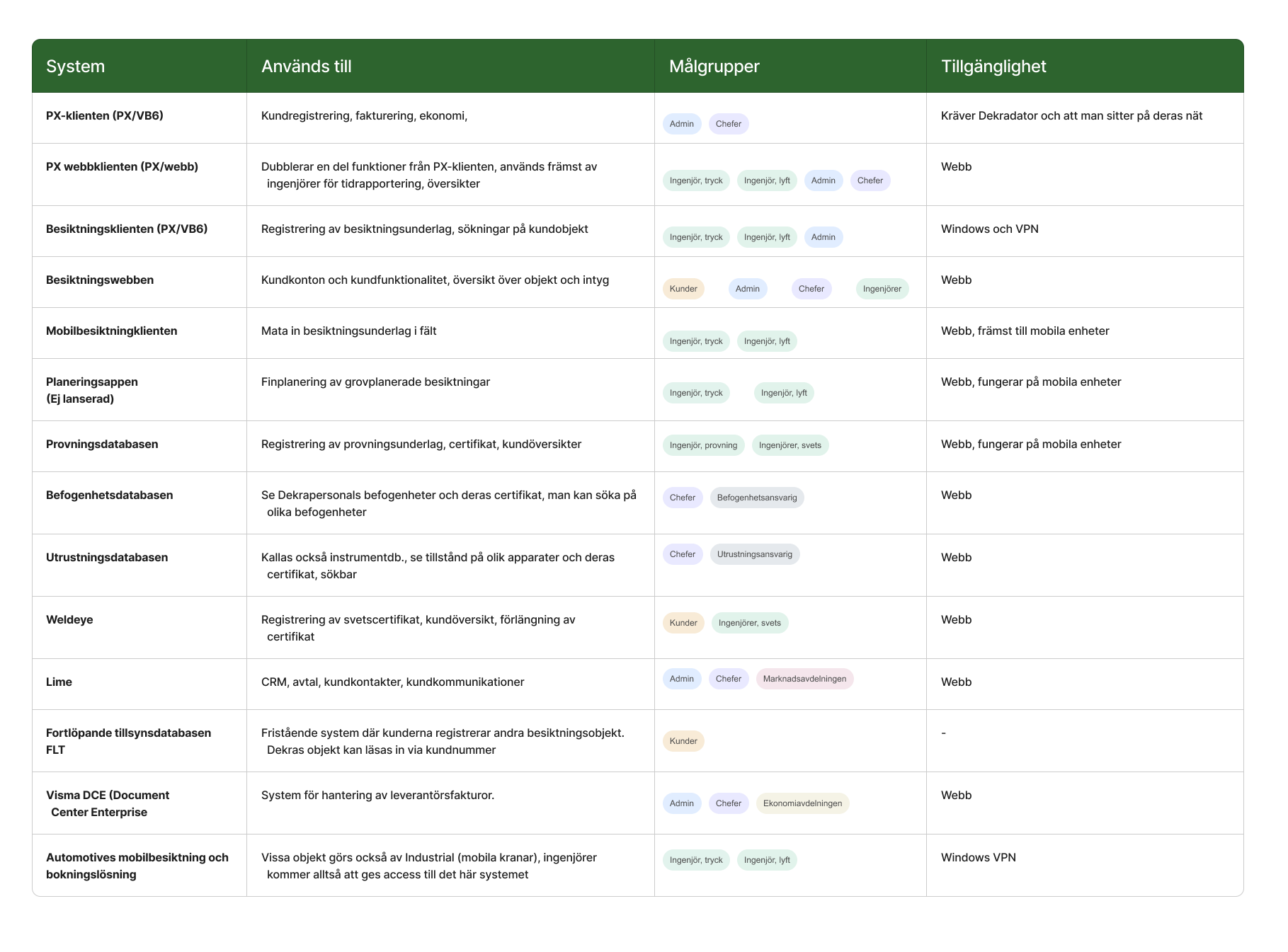
Different parts of the business relied on a large number of specialised systems for customer information, inspections, certification, planning, time reporting and other tasks. Some functionality overlapped, while information often had to be entered more than once.
This made it harder for users to get a complete overview of customers, objects and ongoing work, and created uncertainty about the reliability of information. At the same time, the future solution needed to work across desktop and mobile contexts and support engineers working away from the office.
One business with many different ways of working
DEKRA covered several technical disciplines, from recurring inspections of lifts and pressure equipment to welding certification and construction control. The underlying activities, documentation and planning needs could differ considerably between them.
Ways of working also varied between roles and office locations. Some variation reflected genuine differences in the work, while other differences had simply developed over time. The challenge was to identify what could be standardised without designing a system that was too rigid for the reality of field work.
Connecting the whole operational chain
Customer information, inspection objects, assignments, planning, checklists, certificates, documentation, time reporting and invoicing were closely connected. A change in one part of the system could therefore affect several other processes and user groups.
The challenge was to define underlying concepts that worked across this entire chain, rather than designing separate solutions for individual screens or tasks. The information model, workflows and terminology needed to remain consistent while still accommodating the differences between DEKRA’s technical areas.
My Role
My role combined UX research, requirements analysis, process and information modelling and interaction design. I worked across the organisation to understand existing systems and ways of working, separate genuine business needs from limitations of the current solutions, and translate that understanding into a coherent future concept. The work moved from broad discovery into increasingly concrete models, workflows and interface concepts, which were then discussed and validated with users and stakeholders.
Understanding how the organisation actually worked
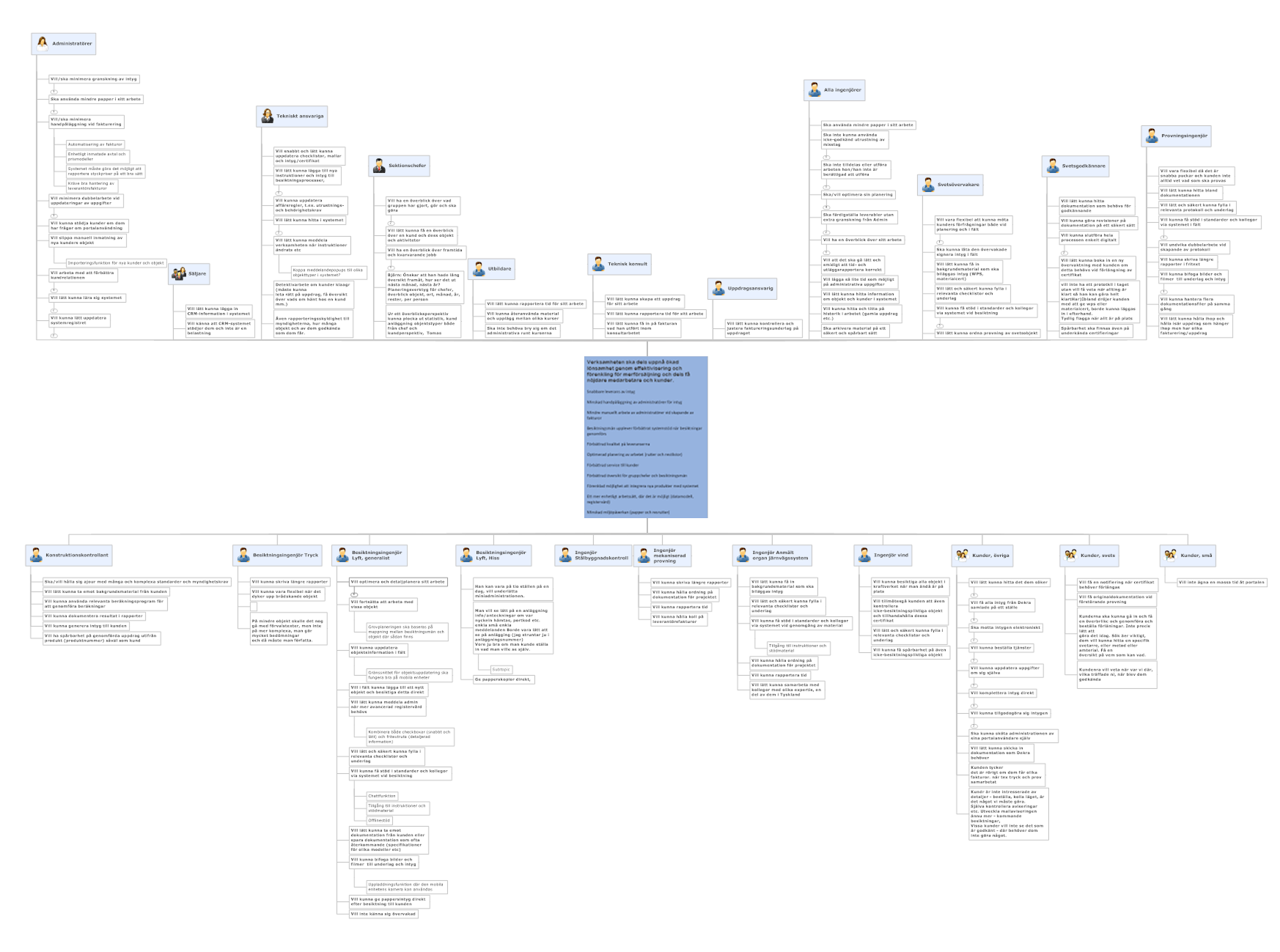
I interviewed and observed users across roles, technical areas and offices around Sweden to understand how work was performed in practice. This included engineers working in the field, administrators, managers, technical specialists and quality stakeholders.
I mapped users, activities, existing systems and dependencies across the operational journey. This exposed both common needs and important differences between disciplines, office locations and roles, and created a basis for distinguishing useful flexibility from unnecessary variation.
Creating a common model for customers, objects and work
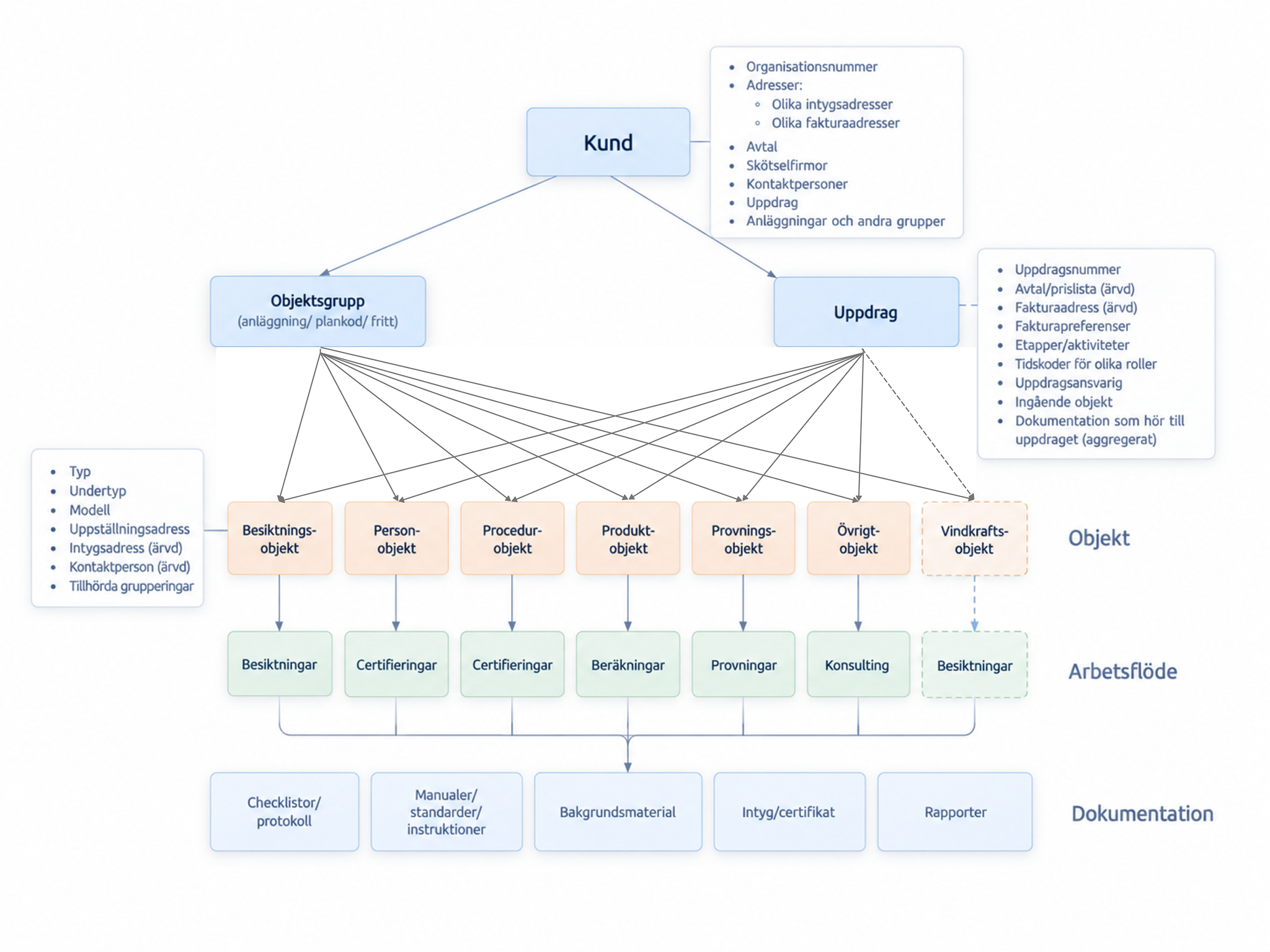
I developed an information model connecting central concepts such as customers, inspection objects, assignments, workflows and documentation.
A key principle was that the model should reflect DEKRA's real world rather than the limitations of its existing systems. For example, information could be inherited from customers to individual objects while still allowing exceptions, reducing duplicate data while keeping information relevant at the point of use.
The model also needed to accommodate very different kinds of inspection objects and workflows without creating separate system structures for every technical area.
Turning processes into workflows and interaction concepts
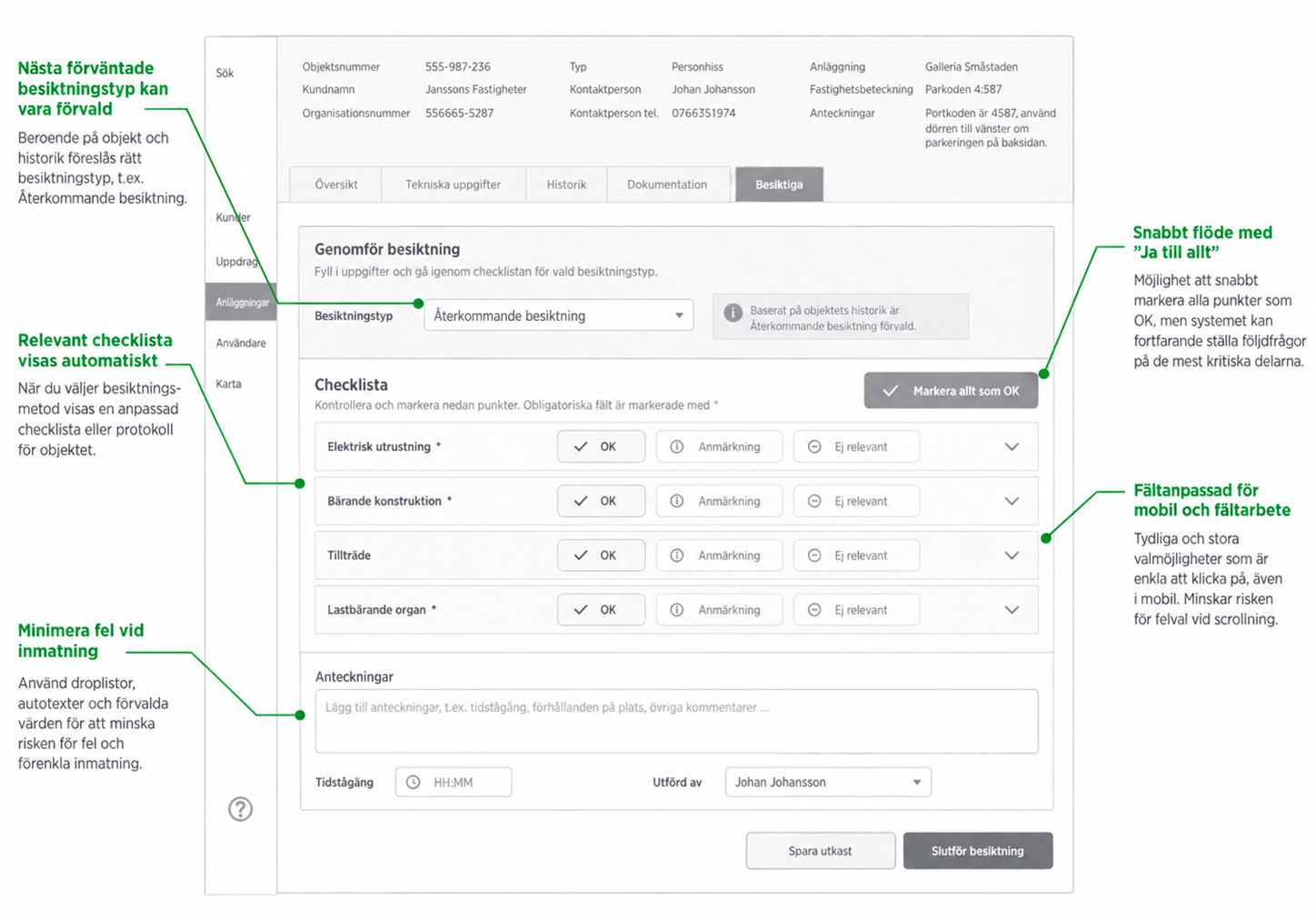
I translated the research and system model into proposed workflows for activities ranging from creating customers and assignments to planning work, carrying out inspections, producing certificates, reporting time and preparing invoicing.
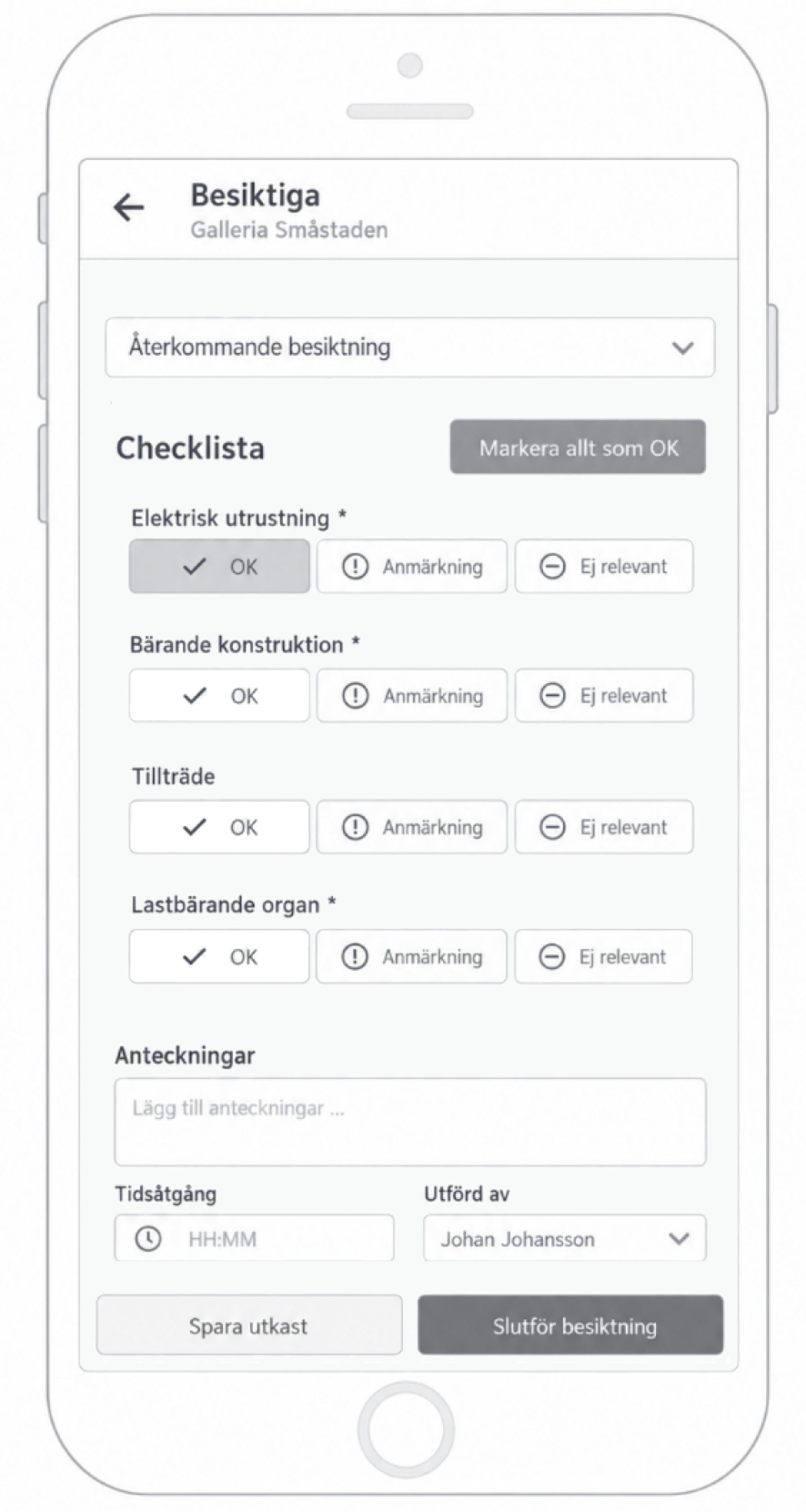
The interaction concept centred on reusable views for lists, individual entities, maps, calendars and field checklists. Design principles included giving users better overview and search, making it easier to do the right thing, and keeping workflows flexible rather than over-automating complex real-world decisions.
Testing the concept and defining what needed to happen next
I evaluated proposed ways of working and the system concept with users and representatives from the business. The discussions and results exposed areas where the direction worked well as well as questions that required further business or technical investigation.
I translated this into requirements, design principles and recommendations for the next phase. This included making clear which questions still needed further investigation, such as process changes, offline use, performance, migration and organisational responsibilities.
Impact
The assignment gave DEKRA a clearer basis for moving from a collection of specialised systems towards a more coherent operational platform. It connected user needs, business processes and information structures into a common concept and made explicit where organisational decisions were needed before technology could solve the problem.
Creating a shared picture across a complex organisation
The research brought together ways of working that had previously been spread across technical areas, offices, roles and systems.
Mapping users, activities and processes made similarities and differences more explicit and provided a common basis for discussing how DEKRA should work in the future. It also surfaced questions that were organisational rather than simply system problems, such as pricing, approval authority and the enquiry process.
A coherent concept instead of another isolated system
The resulting model connected customers, objects, assignments, workflows and documentation into one conceptual structure.
This provided a way to think about the whole operational chain rather than continuing to optimise individual applications separately. It also created a foundation for consolidating more activity into fewer systems, reducing duplicate entry and eventually giving both employees and customers a more unified view. My analysis identified central opportunities such as how to reduce the number of systems and tools and more consistent ways of working.
Clear design principles grounded in real work
The work established principles that could guide later design and development: make information easier to find, entering information only once, improve overview, capture information where it originates, support users in doing things correctly, and preserve flexibility where work genuinely varies.
It also highlighted requirements that could easily be underestimated in a conventional desktop-system project, particularly mobile field work, offline access and performance.
A stronger foundation for procurement and development
The concept, system model, workflows and requirements created a more concrete basis for the next phase of the project and the future solution.
Just as importantly, the work documented what was not yet known. It identified areas requiring further research, technical analysis and organisational decisions before detailed development, including customer needs, data migration, offline behaviour and process changes. This reduced the risk of committing to a solution before the underlying business and user requirements were fully understood.